Most B2B companies still operate with inconsistent sales: some excellent months, others poor, unpredictable cycles, low-quality leads, and overworked teams.
The problem isn't the team; it's the lack of one structured process + data + automation.
According to recent studies:
A predictable process isn't optional — it's what differentiates companies that grow from those that just “put out fires”.
A predictable process is one where:
A scalable process is one that It doesn't depend solely on hiring more people to grow.
Companies that structure this type of operation:
According to Gartner, B2B sales today require an operation nonlinear, with multiple points of contact and information-based decisions (source: Gartner — Future of Sales 2025 Report).
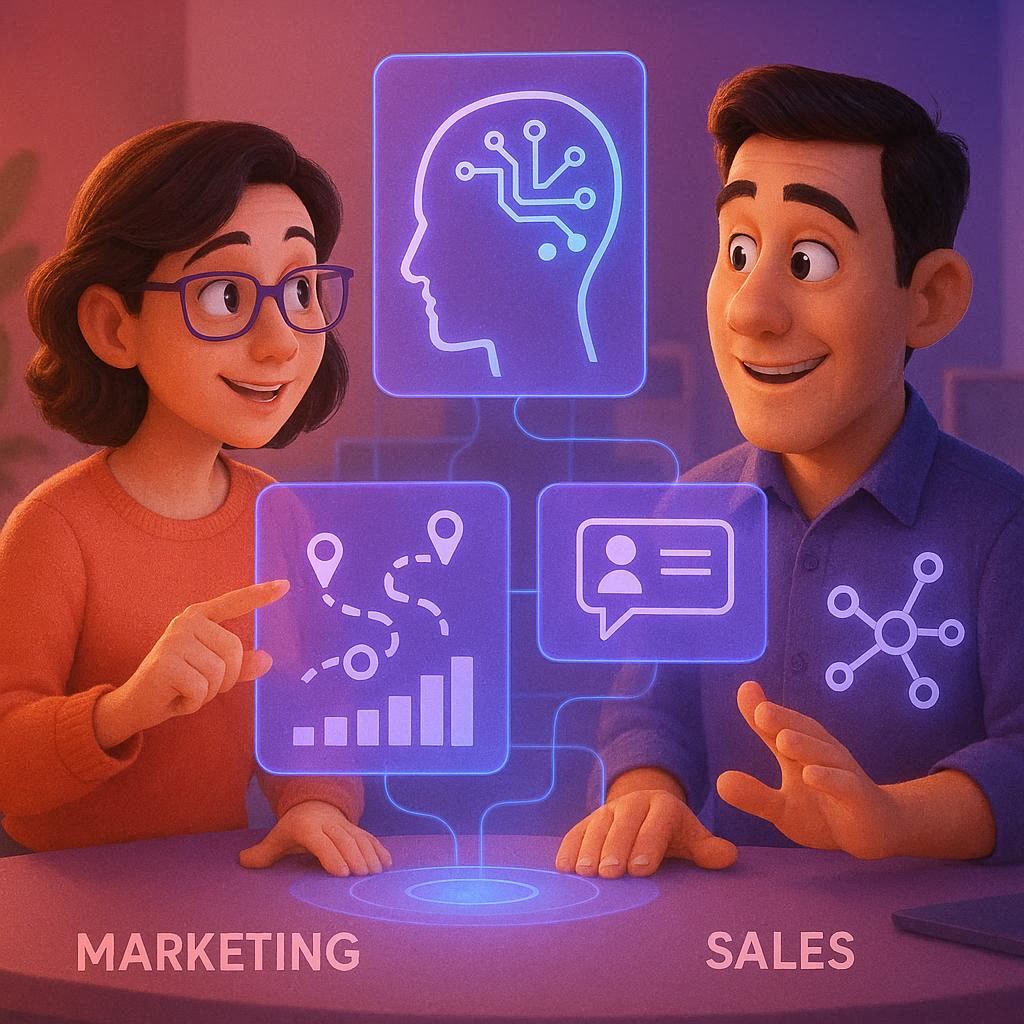
To be predictable and scalable, the process must be based on four pillars:
According to McKinsey, data-driven companies generate 20% plus revenue (source: McKinsey Analytics).
Without data, there's no predictability.
Without ICP of course, there's no focus.
Sales teams spend 65% of the time on non-sales tasks (source: Salesforce — State of Sales).
Without automation, the funnel locks.
93% of B2B buyers expect personalized interactions (source: Accenture — “Make It Personal”).
Without personalization, there's no conversion.
Companies with formal playbooks have 33% more efficiency (source: The Bridge Group — Sales Development Metrics Report).
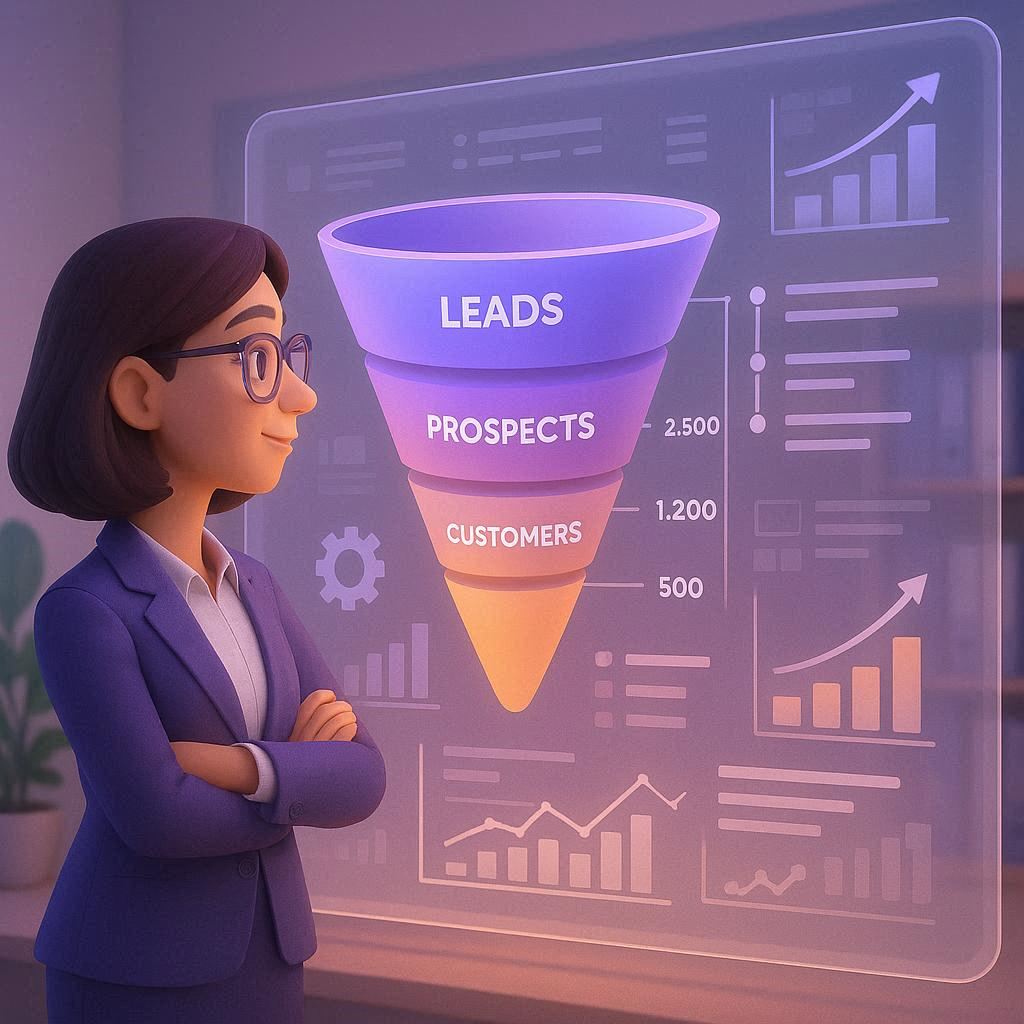
According to Forrester, 99% of the leads generated don't become customers (source: Forrester — Demand Generation Benchmark 2024).
This does not happen because of a lack of volume, but because of:
And that problem is compounded without automation.
AI isn't just a tool; it changes the engine of business operation.
According to Accenture, companies that adopt AI in sales have:
(source: Accenture — AI in Sales Global Study)
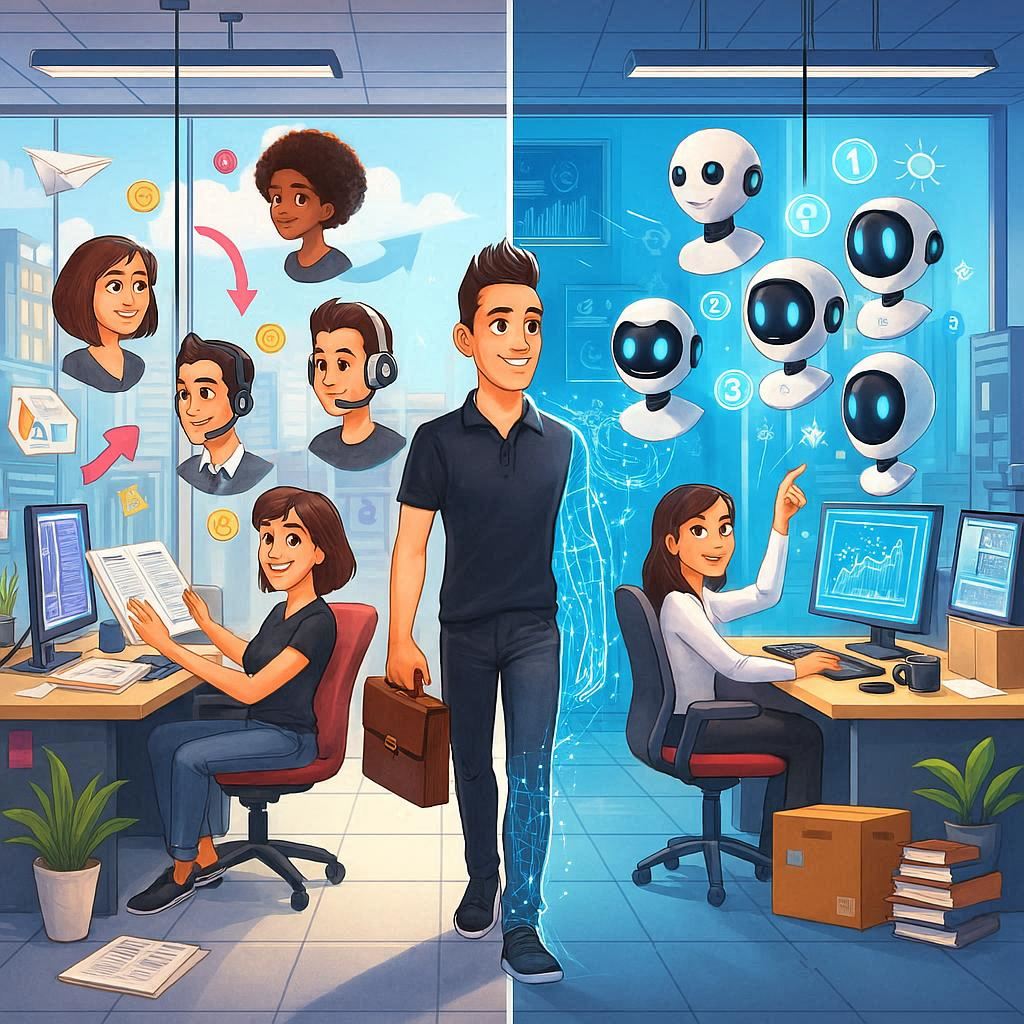
The big change lies in the fact that the process ceases to be manual, slow, and inconsistent - to become continuous, contextual, and automated.
The ICP must consider:
According to LinkedIn, 44% of sellers spend time with leads that will never buy (source: LinkedIn State of Sales 2024).
Generic lists generate high CAC and low conversion.
Companies that use data enrichment have up to 45% more conversions (source: Clearbit — Data Impact Report).
Manual cadences don't scale.
According to Outreach, automated cadences increase responses by Up to 3x (source: Outreach — Sales Engagement Benchmarks).
Companies that use intent data shorten the sales cycle by 22% (source: DemandScience — B2B Intent Report 2024).
Personalized messages increase response rate by up to 300% (source: McKinsey — “Personalization at Scale”).
Teams with defined playbooks have 31% more predictability (source: Sales Hacker — State of Sales Development).
Predictable processes rely on metrics:
Companies that review metrics on a weekly basis grow 5x faster (source: BCG — Data-driven Growth).
Most companies are unable to apply this model because it requires:
Nuvia solves all of this with:
Nuvia's agents:
With Nuvia, your company starts to operate as global high-performance companies:
Companies that adopt ALLBOUND AI Agents have observed:
(internal performance sources from Nuvia clients; comparable to the benchmark of platforms such as Apollo, Clay, and Salesforge)
When data, automation, and AI work together, sales stop being trial and error and become a scientific operation.
Companies that already master predictability in sales use:
And it's this system that Nuvia delivers:
a predictable, scalable growth engine fully driven by artificial intelligence.
If your goal is to sell more, with less effort, less cost, and greater control over the future, the answer is clear:
Predictability is not improvised.
Predictability is built — with Nuvia.